
Sun protection

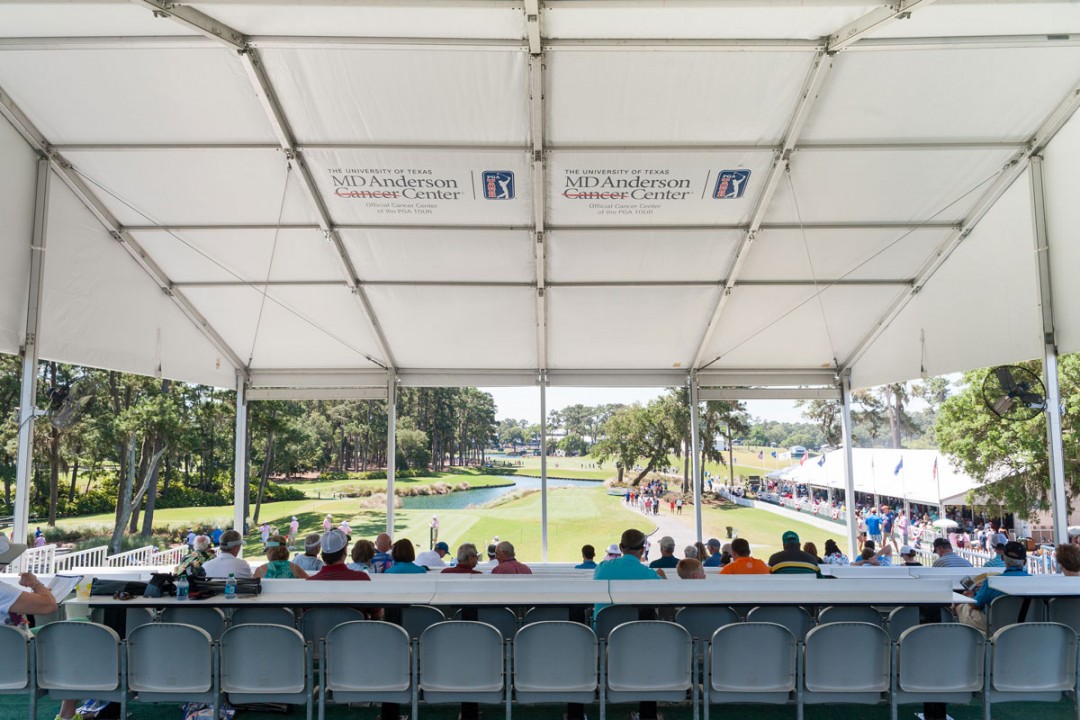
One of the world’s most respected cancer centers has launched a campaign in partnership with the PGA TOUR to help players and fans be more aware of the risk of skin cancer caused by overexposure to the sun’s rays. By Charles Ford Because we spend much of the summer season enjoying great tournaments on beautiful courses, overexposure to harmful rays from the sun puts players and fans at risk for melanoma, the most deadly form of skin cancer. Awareness of this significant risk is essential, say experts at the University of Texas MD Anderson Cancer Center, because skin cancer is the most common cancer in the United States. Educating the public about sun protection and skin cancer prevention is one of the driving factors behind MD Anderson’s relationship with the PGA TOUR. In 2015, MD Anderson began a major public initiative to reduce cancer risk among the golf community and the general public through an educational awareness campaign. Practical sun protection At select PGA TOUR and PGA TOUR Champions events, MD Anderson is providing fans with practical UV protection, including free sunscreen stations and shaded areas throughout the courses where spectators can get out of the sun. Fans also receive interactive educational materials, SPF 30 lip balm and sunglasses. A signature element of this initiative is MD Anderson’s “Strike Through Cancer Wall,” an outlet that empowers individuals to show their support for cancer survivors or their loved ones by signing their names and messages of hope. “At MD Anderson, our mission is to eliminate cancer through patient care, treatment, prevention and education. By working with the PGA TOUR, we are able to increase public awareness of sun protection habits so people can act to reduce their risk of skin cancer, among other diseases,” says Tom Buchholz, M.D., executive vice president and physician-in-chief at MD Anderson. “Since skin cancer is the most common malignancy—and is the most preventable—public knowledge is essential to ending this disease.” Risks and myths Nearly 5 million people receive treatment for skin cancer in the U.S. every year. Of these cases, statistics show that the risk of melanoma is increasing, especially in the under-40 age group, and with a higher incidence being noted among women. Remember that having dark skin does not protect you from skin cancer—the disease is increasing among African-Americans and Hispanics as well. What is my risk? MD Anderson has identified 8 risk factors for skin cancer and advises that if you have one or more of these risk factors, you should consult your doctor or schedule a skin cancer-screening exam: • Family history of melanoma • History of frequent or intense sun exposure • History of tanning bed use • More than 50 moles • One or more blistering sunburns • Personal history of basal cell and/or squamous cell skin cancers • Personal history of melanoma • Red or blond hair, fair skin, freckles and blue or light-colored eyes Check for signs Be aware of your body. Keep track of new and changing spots or moles and remember: Change is key - Look for new spots or spots that change. Be thorough - Skin cancer can develop in places that do not get sun exposure. This can include the soles of your feet, buttocks and genital area. Ask a family member to inspect hard-to-see areas such as the scalp. Pay attention to rough or raised areas when you shampoo or apply lotion. Increase your sun protection “Taking steps to protect your skin from over-exposure to the sun’s harmful rays is essential,” says Buchholz. Here are some tips: • Look for shady areas when outside and avoid the sun between 10am and 4pm. • Use sunscreen and lip balm—apply liberally, 30 minutes before going outside. Reapply every two hours, and choose products with SPF 30 or higher. • Cover up—wear dark, tightly woven clothing. Choose a hat with a large brim to protect your ears and neck. • Wear sunglasses—look for lenses that provide both UV-A and UV-B protection. • Skip the tanning bed—tanning beds are not a safe alternative to the sun. Helping you on the PGA TOUR MD Anderson physicians continue to promote sun safety with the PGA TOUR this year, providing complimentary skin screenings at the Shell Houston Open, Insperity Invitational, THE PLAYERS and TOUR Championship by Coca-Cola. Most recently at THE PLAYERS there were screenings available for the public for the first time, conducted in partnership with MD Anderson’s local affiliate hospital, Baptist MD Anderson Cancer Center. “Since offering screenings on TOUR, we are pleased that more than 175 players and caddies have participated,” says Jeffrey Gershenwald, M.D., professor of surgical oncology at MD Anderson. “Providing a valuable service in a convenient way to people who spend most of their days in the sun has allowed us to further MD Anderson’s mission to end cancer.” ---------- Grateful PGA TOUR fans • Complimentary sunscreen is located around select courses for fans to use, courtesy of MD Anderson. Last year, grateful spectators took advantage, using more than 73 gallons of sunscreen at four tournaments. • MD Anderson has provided shaded public venues this year at the Shell Houston Open, Insperity Invitational (PGA TOUR Champions), and THE PLAYERS. Look for them next at TOUR Championship by Coca-Cola. • The “Strike Through Cancer Wall” at the above-mentioned tournaments enables the public to write messages of hope or inspiration to the cancer community. In 2015, more than 43,000 people signed the “Strike Through Cancer Wall” at PGA TOUR events. • To learn more about MD Anderson, click here.

Upcoming Tournaments

Top Player Profiles


